
How to Identify Best Quality Dog Food Labels: The Compass Every Pet Parent Needs
Have you ever frozen in the pet food aisle, a bag in each hand, with no clue which one is the right choice? That confusion isn’t an accident—the industry spends a fortune making sure dog food labels speak sweetly but say very little. Learning how to truly read a dog food label and its certifications is like switching on a black light in a room full of airbrushed promises. Here’s the ultimate magnifying glass so you can identify, without a shadow of a doubt, a label that gives your dog back their health with every single scoop.
1. The Anatomy of a Dog Food Label: What You See vs. What They Hide
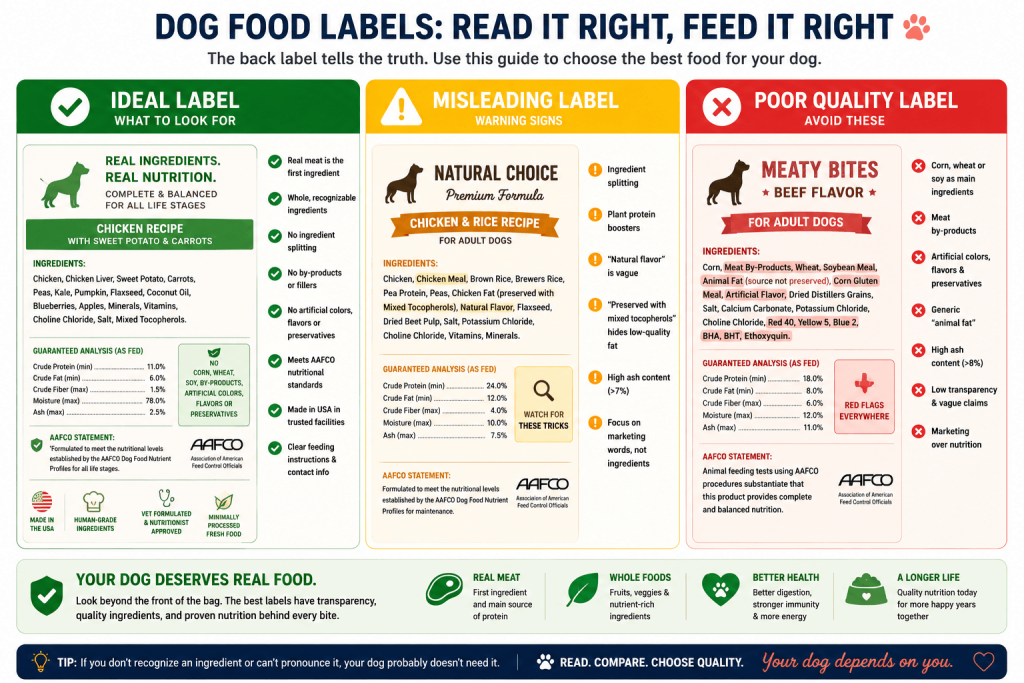
Dog food labels are crafted with consumer psychology. The front is a salesperson; the back is a forced confession. Your mission is to ignore the sales pitch and become a detective of the fine print.
Product name rule (the 95%, 25%, and 3% game): The FDA and AAFCO regulate this. A food called “Chicken for Dogs” must contain at least 95% chicken. “Chicken and Rice” drops to 25%. “Chicken Flavor,” a measly 3%. The name itself maps out the real density.
Nutritional info panel: The guaranteed analysis only shows minimums and maximums (crude protein min, crude fat min, crude fiber max, moisture max). It doesn’t tell you about quality or digestibility. It’s a partial snapshot.
Ingredient list: The holy grail. Listed by weight before processing. The dirty tricks start right here, but in a few minutes, you’ll know exactly how to disarm them.
2. The Guaranteed Analysis: The Numbers That Actually Matter (and the Ones That Lie)
Judging a food by its protein percentage alone is like judging a book by the font on its cover. The dog food labels that point to the best quality force you to do some quick, simple math.
| Metodología Clave | Cálculo e Impacto Nutricional |
|---|---|
| Protein on a Dry Matter Basis (DMB) | Si la croqueta tiene 24% de proteína y 10% de humedad, su DMB es 24/(100-10)*100 = 26.6%. Compáralo entre croquetas y latas. La mejor calidad supera consistentemente el 30% de DMB. |
| Protein-to-Fat Ratio | Un perro adulto sano necesita una proporción de 2:1 o superior. Si la grasa casi iguala a la proteína, es energía barata y no construcción muscular. |
| Ash Content | Un valor superior al 8% a menudo sugiere relleno de hueso molido y minerales de baja biodisponibilidad. Es hueso, no nutrición. |
3. AAFCO: The Seal That Separates Safe Food from a Guessing Game
True best quality doesn’t exist without a backing that certifies the food is complete and balanced. AAFCO (Association of American Feed Control Officials) is the gold-standard watchdog, with a few key nuances.
“Formulated to meet AAFCO nutrient profiles”: Tested in a lab, not on live dogs. This is the bare minimum standard.
“Animal feeding tests using AAFCO procedures”: Real dogs were fed this food for 26 weeks while their health was monitored. This is the gold standard. Demand it if you’re searching for a genuine best quality dog food label.
“All Life Stages” vs. “Adult Maintenance”: The first is stricter; it guarantees that a growing puppy gets what they need. The second is sufficient only if your dog is an adult and completely healthy.
4. Buzzwords Decoded: "Natural," "Holistic," "Human-Grade"—Real or a Trap?
Dog food labels are littered with terms that sound heavenly but legally mean very little. Don’t fall for adjectives; commit to facts..
| Término Comercial (Buzzword) | La Verdad Incómoda que Esconde |
|---|---|
| "Natural" | Definición de la AAFCO: ingredientes sin procesamiento químico. Pero aun así puede contener color caramelo, azúcar y subproductos naturales. No es en absoluto un sinónimo de calidad premium. |
| "Holistic" | Cero definición legal. Cualquiera puede estamparlo en la etiqueta. Es un eslogan publicitario, no una certificación. |
| "Human-Grade" | Solo aplica si la planta de fabricación es de grado humano y el empaque lo indica explícitamente. Muy pocas marcas lo hacen realmente. Si no ves la certificación, es un cuento de hadas. |
| "Grain-Free" | Cambiar granos por legumbres no siempre es una mejora. A veces solo estás cambiando un almidón por otro. La clave es la calidad de los ingredientes, no la ausencia por sí sola. |
5. Dirty Tricks on the Ingredient List: Splitting, Grouping, and Other Scams
Manufacturers who don’t trust their own dog food ingredients manipulate dog food labels. Recognizing these tricks makes you immune to deception.
Ingredient splitting: They separate corn into “ground corn,” “corn gluten,” and “corn flour” so the animal protein leads the list. Added together, corn would be the very first ingredient. A classic swindle.
Hidden plant protein: Wheat gluten, isolated pea protein… they inflate the protein percentage on the guaranteed analysis without providing the complete amino acid profile of real meat.
Bait-and-switch with tiny ingredients: “With blueberries and spinach,” but they appear in spot number 35, right after salt. Their nutritional contribution is purely decorative, not functional.
6. Country of Origin and Transparency: Why It's a Non-Negotiable
A quality dog food label is proud of its origins; the one that hides its sources is terrified you’ll find out.
“Made in USA” vs. “Formulated in USA” vs. “Made with Global Ingredients”: Only “Made in” with traceable sourcing gives you real control. The rest is a sea of ambiguity.
Clear lot code and best-by date: If you need a magnifying glass to read them, that’s a red flag. Operational transparency mirrors nutritional transparency.
Direct contact info: A best quality brand puts a real phone number and email on the package. Call them. Ask about digestibility or the origin of the first ingredient. If they dodge the question, your answer is crystal clear.
7. Certifications That Elevate a Brand: The Seals You Must Seek
Beyond AAFCO, certain certifications turn a good label into a passport of absolute trust. They are what identify the elite dog food labels.
USDA Organic Certification: Guarantees at least 95% organic ingredients, free from synthetic pesticides and chemical fertilizers. Total armor.
MSC Certification (Marine Stewardship Council): If the protein is fish, this blue seal ensures sustainable fishing and ocean-to-bowl traceability. Quality with a conscience.
Fair Trade Certification: Ingredients like coconut or quinoa come from ethical chains. It doesn’t change the direct nutrition, but it speaks volumes about the brand’s values.
GMP Seal (Good Manufacturing Practices): The plant follows pharmaceutical-grade manufacturing standards. Top-tier hygiene, pest control, and microbiological safety.
Conclusion: Your Trained Eye Is the Ultimate Certification
Identifying top-tier dog food labels is no longer a mystery reserved for vets. With your new ability to dissect a guaranteed analysis, spot ingredient splitting, and demand real certifications, you become the irreplaceable guardian of your companion’s nutrition. Every label is a promise; you now decide which ones truly deserve their bowl.
Keep building your knowledge with our allied guides:
Master the ingredient list: Dog Food Ingredients
Discover which brands actually meet these standards: [Link to Cluster: best dog food brands high quality 2025]
Return to the central guide: The Ultimate Guide to High Quality Dog Food.
Facebook
Pinterest
X
Email
