
Cracking open a can of wet food and watching your dog devour it with bright, eager eyes is one of the simplest, deepest satisfactions a pet parent can feel. Yet at the same time, doubts creep in: is it as complete as a good kibble? Am I giving them an expensive treat or superior nutrition? Choosing between wet dog food and elite dry kibble isn’t a trivial decision, because each format has strengths that can genuinely transform your companion’s health. This dogma-free comparison reveals when the best wet dog food is unbeatable, when kibble remains king, and above all, how to combine them so you capture the best of both worlds.
1. The Power of Moisture: Why Water Is the First Great Nutrient in Wet Food
The most obvious difference between dog food wet and dry kibble is the water content, but its impact on the canine body is profound and deserves respect.
Built-in hydration: Wet dog food contains between 70% and 85% moisture. A dog that naturally drinks very little, a cat disguised as a dog, a senior with delicate kidneys, or one with kidney disease finds a constant water source in the wet format that protects their urinary tract.
Fullness without so many calories: Water adds volume without energy. A dog prone to obesity can eat a visually generous portion of low-fat best wet dog food and feel full without spiking their calorie intake. The illusion of abundance is a real weight-management tool.
Gentle chewing for tender mouths: Teething puppies, senior dogs with tooth loss or periodontal disease, toy breeds with crowded teeth and tiny jaws. The soft, moist texture is a relief that lets them get nourishment without pain.
Less aggressive thermal processing: Sterilization in a can or tray happens at lower temperatures than the extrusion of kibble. Some vitamins and heat-sensitive phytochemicals survive better. Quality wet dog food preserves the real aroma and taste of meat.
2. The Science of Kibble: Nutrient Density, Dental Health, and Pure Convenience
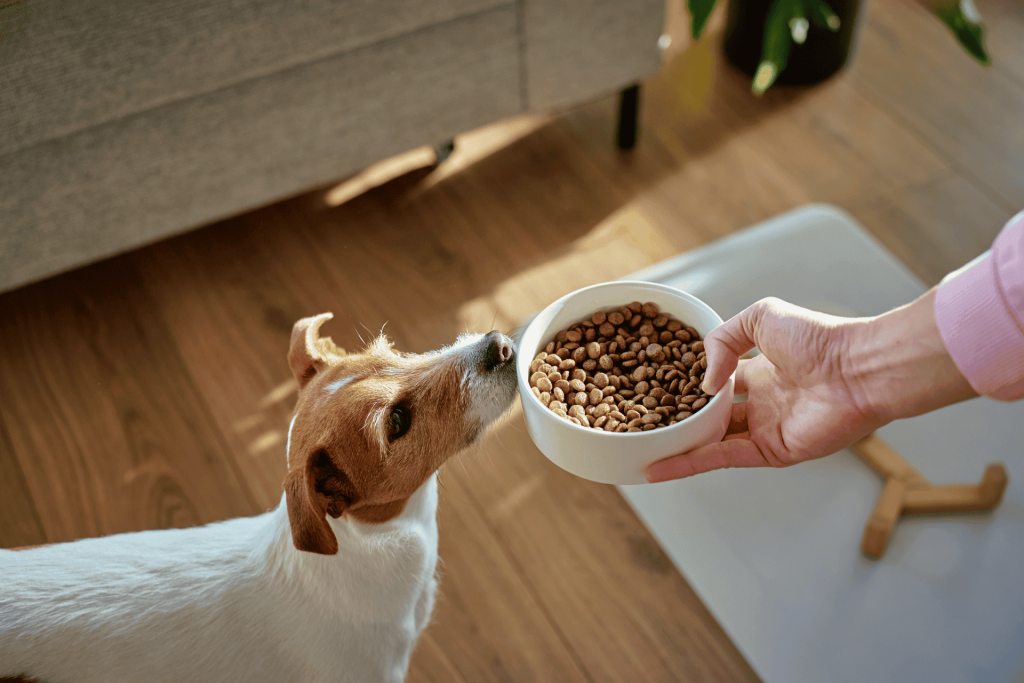
Defending the best kibble isn’t an old-fashioned stance; it’s recognizing advantages that the wet format can rarely match.
Extreme nutrient density: Without water taking up space, every gram of kibble is a concentrated bomb of protein, fat, vitamins, and minerals. An active dog, a working dog, or a large breed that needs a lot of energy in a small volume benefits from this efficiency.
Mechanical dental health: The abrasive texture of a kibble designed with specific shapes scrapes bacterial plaque from the tooth surface. Wet dog food doesn’t have this effect; in fact, if it’s used exclusively and teeth aren’t brushed, tartar advances faster.
Stability and convenience: An opened bag of dry kibble keeps for weeks without refrigeration, doesn’t spoil in the bowl for hours, and is the unbeatable format for automatic feeders, long trips, and pet parents with busy lives.
Generally lower cost per calorie: High-quality best dog food wet, pound for pound, is usually more expensive than an equivalent dry kibble because you’re paying for a high percentage of water. Kibble yields more per calorie serving.
3. The Fact Table: An Unbiased Comparison Between the Best Wet Food and the Best Dry Kibble
To decide with your head and not just your heart, you need the data side by side. The best quality dry vs wet dog food comparison is summarized right here.
| Key Criteria | High Quality Wet Dog Food | High Quality Dry Kibble |
|---|---|---|
| Hydration | Excellent (70-85% water). Ideal for dogs that drink little, or those with kidney or urinary issues. | Minimal (8-10% water). Requires the dog to drink enough on their own. |
| Caloric Density | Low by volume. Ideal for weight control and visual satiety. | High by volume. Ideal for dogs with high energy demands but small stomachs. |
| Dental Health | No cleaning effect. May promote tartar if there's no complementary tooth brushing. | Mechanical abrasive action. Helps control plaque. Some include tartar-binding agents. |
| Palatability | Very high. Intense aroma, tender texture. Best wet dog food is irresistible for picky eaters. | Variable. Elite options use freeze-dried liver, dehydrated broth, or oils to elevate flavor. |
| Processing | Gentle sterilization (moist heat). Good preservation of heat-sensitive vitamins. | High-temperature, high-pressure extrusion. May degrade some nutrients, but elite formulas restore and protect them. |
| Convenience | Once opened, must be refrigerated and used within 2-3 days. Less practical for on-the-go. | Unbeatable. Keeps for months in the bag, lasts for hours in the bowl. Ideal for travel and busy routines. |
| Cost per Serving | Generally higher, because it contains a lot of water. You pay for hydration and palatability. | More economical long-term. Greater caloric yield per pound. |
| Ingredients | Less need for preservatives and binders. Natural texture. Usually contains more fresh animal protein. | Needs starches or legumes to form the kibble. The quality of those binders makes all the difference. |
4. When to Choose the Best Wet Dog Food (and When Not To)
Best wet dog food isn’t for everyone, but in these cases it’s unbeatable.
A dog that drinks very little: Cats—sorry, dogs—that ignore the water bowl. Wet food prevents concentrated urine, stones, and kidney stress.
Chronic kidney disease or urinary problems: The extra water helps the kidneys flush out toxins with less effort. Veterinary wet formulas are a therapeutic cornerstone.
Senior dogs with dental pain or missing teeth: Chewing hurts. Dog food wet allows nourishment without suffering.
Puppies transitioning from weaning: A slurry of wet dog food with warm water is the perfect middle step between mother’s milk and solid kibble.
A sick, convalescing, or inappetent dog: The potent aroma and soft texture of best dog food wet stimulate appetite when kibble is rejected.
When it’s NOT the best sole option: Dogs prone to tartar without dental hygiene, pet parents on a very tight budget, dogs needing high energy in small volume (elite athletes), or when a fridge isn’t available.
5. The Art of Combination: Mixed Feeding, the Best of Both Worlds
Most dogs don’t need to choose just one format. Mixed feeding (kibble + wet dog food) is the smartest strategy for many households.
Hydration + dental health: A base of quality kibble (60-70% of daily calories) complemented with wet dog food (30-40%) provides both mechanical dental action and extra hydration. The best of both, with no trade-offs.
Rotating proteins and flavors: Using the same kibble as a base and varying the cans (chicken, salmon, lamb) enriches nutritional diversity and keeps the dog interested in their meals.
Total calorie control: The mix lets you adjust caloric density with precision. For a dog that needs to lose weight, increase the proportion of low-fat wet food and reduce the kibble, keeping the bowl’s volume full.
Golden rule: If you mix, calculate the total calories from both sources so you don’t overfeed. The best dog food wet and the kibble must add up to the daily calories your dog needs, not be an uncontrolled extra.
6. How to Identify High-Quality Wet Dog Food (Beyond the Price Tag)
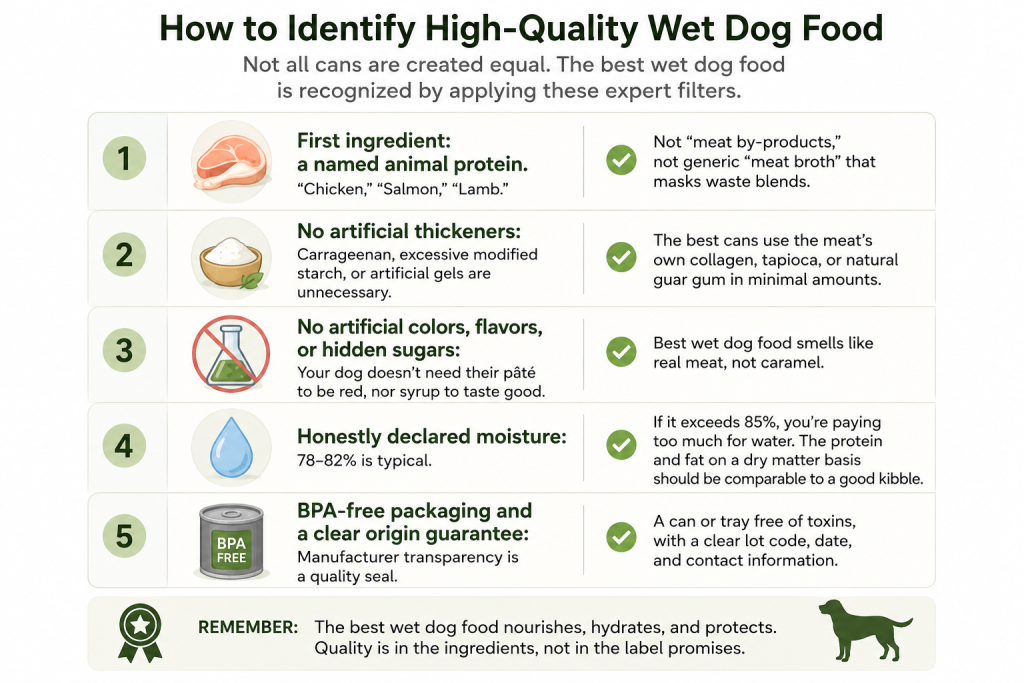
Not all cans are created equal. The best wet dog food is recognized by applying these expert filters.
First ingredient: a named animal protein. “Chicken,” “Salmon,” “Lamb.” Not “meat by-products,” not generic “meat broth” that masks waste blends.
No artificial thickeners: Carrageenan, excessive modified starch, or artificial gels are unnecessary. The best cans use the meat’s own collagen, tapioca, or natural guar gum in minimal amounts.
No artificial colors, flavors, or hidden sugars: Your dog doesn’t need their pâté to be red, nor syrup to taste good. Best wet dog food smells like real meat, not caramel.
Honestly declared moisture: 78-82% is typical. If it exceeds 85%, you’re paying too much for water. The protein and fat on a dry matter basis should be comparable to a good kibble.
BPA-free packaging and a clear origin guarantee: Manufacturer transparency is a quality seal. A can or tray free of toxins, with a clear lot code, date, and contact information.
7. Signs That Your Choice (Kibble, Wet Food, or Mix) Is Working

The success of your dog food wet or dry strategy is measured in your dog’s body and spirit.
Visible hydration: Clear, abundant urine without a concentrated smell. Elastic skin, moist gums.
Fresh breath and clean teeth: If you use wet food, tooth brushing is your ally. With kibble, plaque doesn’t advance.
Perfect weight: Visible waistline, palpable ribs, stable energy.
Shiny coat and firm stools: The fatty acids in best wet dog food reflect in the coat. The high digestibility of both quality formats produces compact stools without foul odor.
Appetite and excitement at mealtime: The dog waits for their bowl with joy, without signs of boredom or refusal.
Conclusion: The Perfect Bowl Isn't a Format, It's an Informed Decision
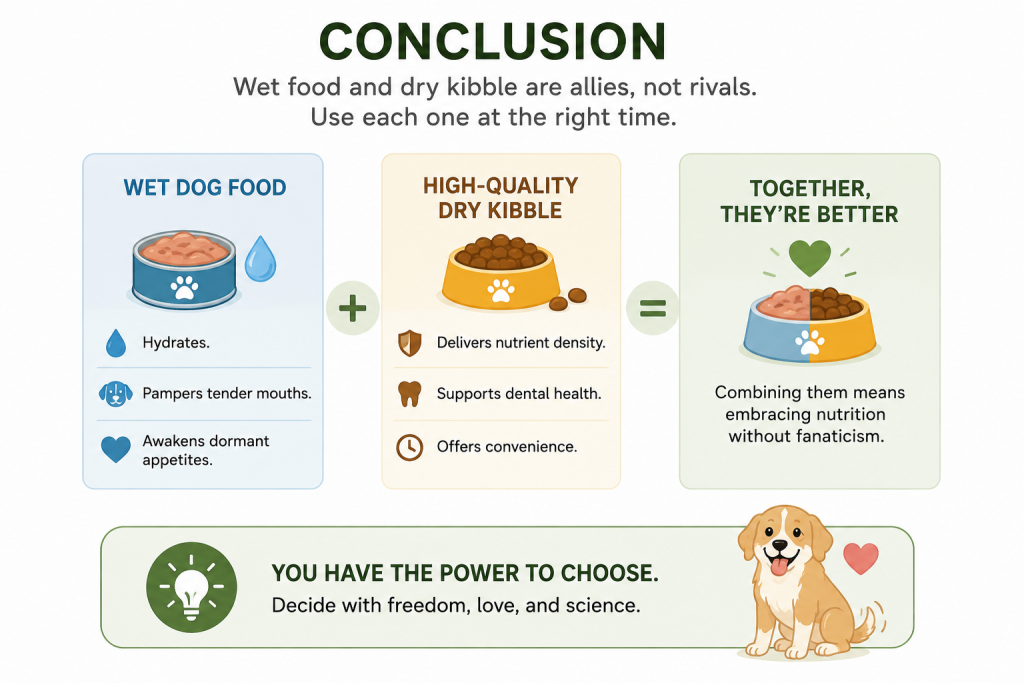
Wet dog food and high-quality dry kibble aren’t rivals—they’re allies that a smart pet parent knows how to use at the right moment. The best wet dog food hydrates, pampers tender mouths, and awakens dormant appetites. Elite kibble delivers nutrient density, dental health, and convenience. Combining them means embracing nutrition without fanaticism. Today, you have the knowledge to decide with freedom, love, and science.
Keep sharpening your expert eye for canine nutrition:
Learn to read the labels on any format so you never fall for marketing tricks: How to Identify Best Quality Dog Food Labels
Master the ingredients that make any dish great, whether dry or wet: Dog Food Ingredients
Is your dog a senior or do they have a sensitive stomach? Texture matters: Best Dog Food for Senior Dogs and Best Dog Food for Sensitive Stomach
Return to the center of all nutritional wisdom: The Ultimate Guide to High Quality Dog Food
Facebook
Pinterest
X
Email
