
Cooking for your dog is an act of love that sparks a fierce debate between the heart and the head. The image of a steaming plate of chicken, rice, and veggies prepared by your own hands contrasts with the cold precision of a kibble formulated by veterinary nutritionists. Choosing between homemade dog food and an elite commercial kibble isn’t a war of good versus evil—it’s a decision that demands real information, without empty romanticism or a disdain for science. This no-filter comparison gives you the keys so that you, with all the facts in hand, can decide what truly deserves your companion’s bowl.
1. The Heart of Homemade Food: Total Control, Real Ingredients, and a Bond You Can Cook
Championing the best homemade dog food means championing the power of knowing exactly what enters their body.
Absolute transparency: You choose the chicken, the sweet potato, the carrot, the salmon oil. There’s no fine print, no mysterious by-products. A dog with allergies or a sensitive stomach finds a trigger-free sanctuary in healthy homemade dog food.
Ingredients in their purest state: No ultra-processed foods, no synthetic preservatives, no artificial colors. Nutrients arrive alive, not resurrected after extrusion at 350°F. The bioavailability of vitamins and antioxidants is at its peak.
Unbeatable palatability: The real aroma of cooked meat, the tender texture, the natural moisture… A sick, senior, or picky dog often surrenders to a homemade dish when they refuse kibble.
Emotional bond: Cooking for your dog strengthens the connection. Every pot is a declaration of care. But this love must be paired with science so you don’t unintentionally cause harm.
2. The Science of High Quality Commercial Food: Precision, Convenience, and Decades of Research
High quality commercial dog food isn’t some random product; it’s the result of millions of dollars in nutritional research. Ignoring that would mean denying progress.
Complete and balanced formulation (AAFCO seal): Every piece of kibble is designed to meet the exact nutritional profiles a dog needs at each life stage. There are no calcium, zinc, taurine, or vitamin D deficiencies if the formula is well-crafted.
Stability and microbiological safety: High quality commercial food undergoes pathogen, mycotoxin, and oxidation controls. Poorly stored homemade food can become contaminated within hours.
Unbeatable convenience: Travel, work, a lack of time. A quality kibble or can is ready in seconds, with no planning, no fridge, no calcium-phosphorus calculations.
Technology at the service of the nutrient: Freeze-drying, slow-cooking, and oven-baking preserve nutrients that aggressive home cooking can destroy. Some elite kibbles include live probiotics, enzymes, and chelates that a home pot can’t replicate without supplements.
3. The Truth Table: An Unbiased Comparison Between the Best Homemade and the Best Commercial Food
To decide, you need to see the facts face to face. The homemade vs commercial high quality dog food comparison is summarized right here.
| Key Criteria | Homemade Dog Food | High Quality Commercial Food (Premium) |
|---|---|---|
| Ingredient Control | Absolute. You decide every gram. Ideal for allergies and intolerances. | High, but limited to what the label states. You must trust the manufacturer. |
| Nutritional Balance | It's up to you. Without a veterinary nutritionist's recipe, the risk of deficiencies (calcium, zinc, taurine, vitamin D) is real and dangerous. | Guaranteed if it meets AAFCO standards and is formulated by experts. Complete nutritional profiles. |
| Food Safety | Risk of bacterial contamination (Salmonella, E. coli) without extremely hygienic handling and refrigeration. Proper cooking minimizes it. | High microbiological safety. Quality controls, natural antioxidants (tocopherols) that prevent rancidity. |
| Palatability | Very high. Fresh, moist, aromatic food. Ideal for picky eaters. | Variable. Elite kibbles use freeze-dried liver or dehydrated broth to elevate flavor without chemicals. |
| Cost | Can be cheap (cheap homemade dog food) using seasonal ingredients and economical proteins, or very expensive with premium meats. | High-quality kibble has a medium-to-high cost, but it's lower than a premium homemade diet formulated with a nutritionist. |
| Convenience & Time | Very low. Weekly planning, shopping, cooking, weighing, supplementing. Demands dedication. | Very high. Scoop and serve. Perfect for pet parents with busy lives. |
| Dental Health | Doesn't help with tartar. Soft food has no abrasive action. Needs dental hygiene supplements. | Kibble with a studied texture helps mechanically clean teeth. Some include plaque-binding agents. |
| Emotional Impact | Extremely high. The act of cooking strengthens the bond. Personal satisfaction. | Less direct emotional involvement, but the peace of mind that science brings is also love. |
4. How to Prepare the Best Homemade Dog Food Without Putting Their Health at Risk
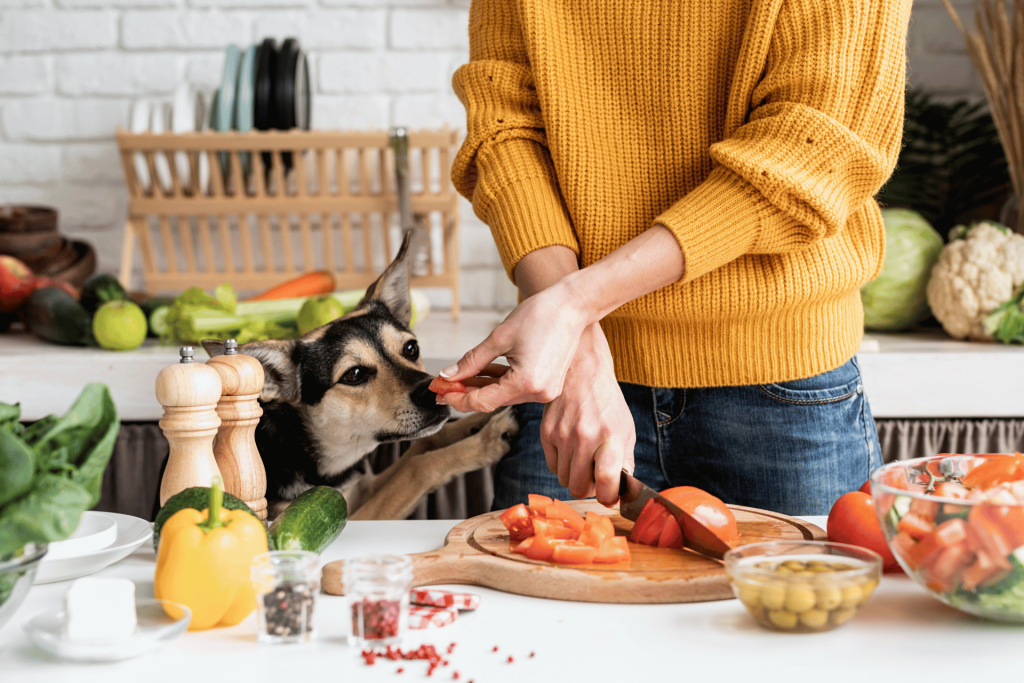
If your decision leans toward healthy homemade dog food, these rules are non-negotiable.
A recipe backed by a veterinary nutritionist: Never improvise with your own leftovers. A sustained calcium-phosphorus imbalance over time causes nutritional secondary hyperparathyroidism, fractures, and bone pain. The recipe must be specific to their weight, breed, age, and medical conditions.
Mandatory supplementation: Meat, rice, and veggies do NOT contain everything. You need to add calcium (calcium carbonate, ground eggshell), omega-3s (fish oil), zinc, iodine, vitamin D, and a multivitamin-mineral complex formulated for dogs. Without supplements, the best homemade dog food becomes a silent sentence.
Lean protein, gentle carbs, and varied veggies: 40-50% cooked animal protein (chicken, turkey, lean beef), 25-30% carbohydrates (rice, sweet potato, quinoa), and 20-25% vegetables (pumpkin, carrot, green beans). Vary the protein and vegetable sources each week to broaden the nutrient spectrum.
Toxic foods forbidden: Onion, garlic, grapes, raisins, chocolate, xylitol, macadamia nuts, avocado. One mistake can kill. Cooking with love isn’t enough if you don’t know this.
Gentle cooking: Boiled, steamed, or in a slow cooker. Avoid frying, reused oils, and spicy seasonings. Simplicity is safety.
5. Cheap Homemade Dog Food: Quality Nutrition Without Breaking the Bank
Making cheap homemade dog food without sacrificing quality is possible if you play it smart.
Buy in bulk and freeze: Whole chicken, giblets (hearts, livers, gizzards), seasonal meats on sale. Cook for several days, divide into daily portions, and freeze. Planned cheap homemade dog food yields more than daily whims.
Economical and noble carbs: Brown rice, oatmeal, sweet potato, boiled potato. They fill, nourish, and cost pennies per serving.
Frozen or seasonal veggies: Spinach, green beans, carrots, pumpkin. Frozen vegetables retain vitamins and are cheaper than fresh ones out of season.
Supplements in just the right amount: Don’t skimp on calcium or the multivitamin. It’s better to cook with modest ingredients and supplement well than to use luxury meat and leave nutritional gaps. The best cheap homemade dog food is balanced, not ostentatious.
Eggs and oily fish on offer: Once or twice a week, a hard-boiled egg (white and yolk) or canned sardines in water with no added salt add high-value protein, omega-3s, and variety without spiking costs.
6. Signs That Your Choice (Homemade or Commercial) Is Working
It doesn’t matter which side you choose. The markers of success are universal.
Firm and consistent stools: Neither diarrhea nor constipation. Digestion is efficient and the gut is calm.
Stable weight and defined muscle mass: Neither obesity nor wasting. Ribs can be felt, the waist is visible. Muscle, especially in senior dogs, is maintained.
Shiny coat and healthy skin: No dandruff, no itching, no bald patches. Fatty acids and zinc are doing their job.
Energy and vitality: A dog that plays, walks, and rests well. No spikes or crashes.
Perfect veterinary bloodwork: The definitive test. Complete blood count, biochemistry, thyroid profile. If everything is within range, your choice is the right one, whether homemade or commercial.
Conclusion: There's No Single Best Dish, Only a Better Informed Pet Parent
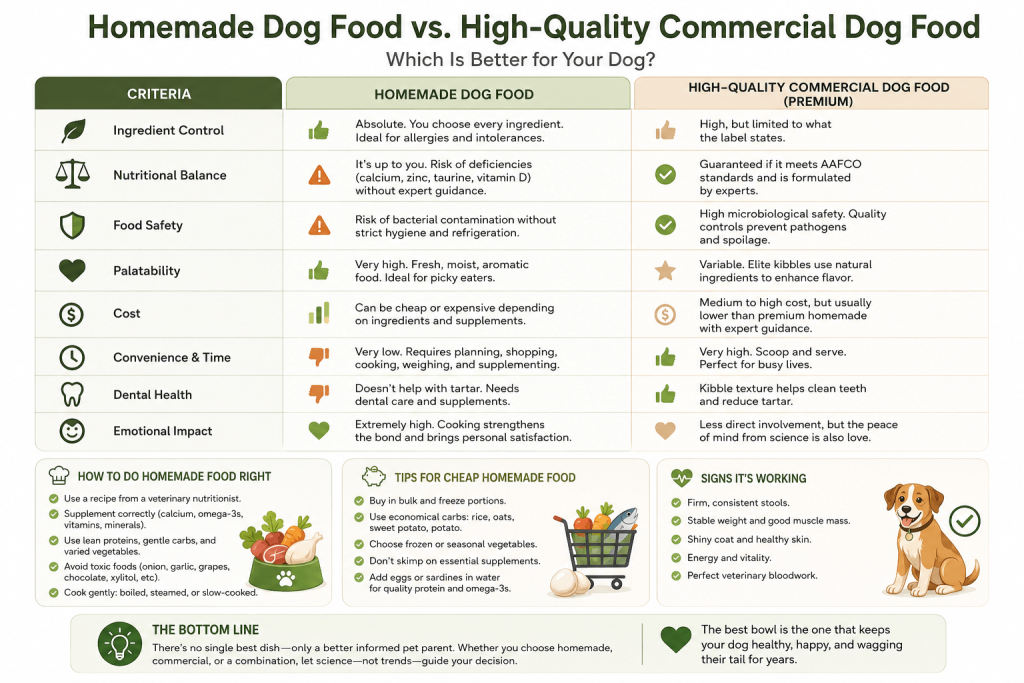
Homemade dog food and high quality commercial food are not irreconcilable enemies; they are tools that an informed pet parent uses with intelligence. You can combine them, alternate them, or fully commit to one with complete awareness, as long as science—and not trends—guides your hand. Because in the end, the best bowl isn’t the one with the most likes on social media, but the one that keeps your dog healthy, happy, and wagging their tail for years.
Dive deeper into the knowledge that makes you the best nutritional guardian:
Learn to read labels to evaluate the quality of any commercial food: How to Identify Best Quality Dog Food Labels
Master the ingredients that heal and the ones that harm, whether homemade or factory-made: Dog Food Ingredients Does your dog have allergies or a sensitive stomach? Discover how to adapt their diet: Best Dog Food for Allergies and Best Dog Food for Sensitive Stomach
Return to the master guide of canine nutrition: The Ultimate Guide to High Quality Dog Food
Facebook
Pinterest
X
Email
