
You’ve done the research, you’ve read the labels, and you finally have that bag of high quality dog food your companion deserves. But now the critical moment arrives: the switch. A harsh transition can turn an excellent kibble into a nightmare of vomiting, diarrhea, and refusal. Transitioning to a superior food isn’t simply mixing two kibbles together; it’s a protocol of respect for your dog’s digestive system. Knowing how to switch to high quality dog food safely is the final link in the chain of expert nutrition. I’ll guide you step by step so that your puppy’s tender stomach, your adult’s steady rhythm, and your senior’s delicate system all embrace high quality dog food without a single hiccup.
1. Why a Safe Transition Is the Best-Kept Secret of Canine Nutrition
Your dog’s gut is home to a population of bacteria and enzymes that have adapted over weeks or months to their previous diet. A radical change is like uprooting an entire ecosystem overnight.
Slow enzymatic adaptation: The pancreas and intestinal villi need time to adjust their production of amylase, lipase, and protease to the new ingredients. High quality dog food typically contains more animal protein and fewer fillers, demanding a metabolic readjustment that can’t happen in 24 hours.
A microbiota under reconstruction: The gut flora must shift bacterial species to process different fibers and proteins. An abrupt transition triggers dysbiosis: pathogenic bacteria proliferate, generating gas, inflammation, and diarrhea.
Respecting their instincts: A dog that rejects a new food isn’t being fussy; their sense of smell detects an unfamiliar nutrient profile. A gradual transition teaches both brain and stomach that this new high quality food is safe and delicious.
2. The Golden Rule: The 7-Day Protocol (Adjustable by Life Stage)
Although the universal standard is the 7-day method, high quality dog food deserves a personalized approach based on your dog’s age and condition. This table gives you the base plan, which we’ll then refine for each stage.
| Day | Old Food | New High Quality Dog Food |
|---|---|---|
| 1-2 | 75% | 25% |
| 3-4 | 50% | 50% |
| 5-6 | 25% | 75% |
| 7 | 0% | 100% |
Important: Watch their stools like a scientist. If at any phase you see soft stools or vomiting, freeze that ratio for an extra 2-3 days before moving forward. Patience is the master key to a safe transition.
3. Transitioning Puppies: The Delicacy of a Digestive System Under Construction
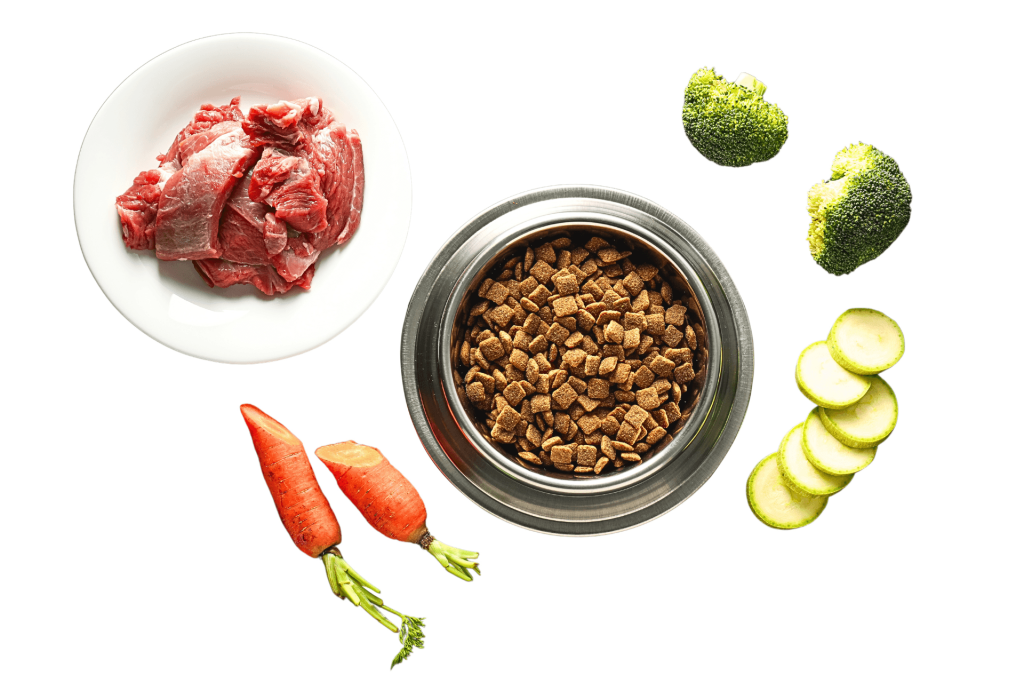
A puppy is programming their microbiota for the rest of their life. Knowing how to switch to high quality dog food safely at this stage is a gift of long-term health.
From weaning or the breeder’s food: If you’re bringing a puppy home, keep them on their original food for at least 5-7 days before starting the transition. The stress of a new home is already enough of a revolution for their little tummy.
An extended 10-14 day transition: A puppy’s gut is more permeable and their enzymatic capacity is still maturing. Instead of jumping every 2 days, advance every 3-4 days: 75% old / 25% new for 4 days, then 50/50 for another 4 days, then 25/75 for another 4 days, and finally 100% high quality dog food.
Soak the new kibble: During the early phases, moisten the new kibble with warm water to form a mush. This eases digestion and reduces the risk of swallowing air.
Supportive probiotics: A supplement with strains like Bacillus Coagulans or Enterococcus Faecium during the transition helps colonize the gut with beneficial bacteria that welcome the new high quality dog food with open arms.
4. Transitioning Adult Dogs: The Balance Between Firmness and Flexibility
A healthy adult has a robust digestive system, but also deeply ingrained habits. The key here is consistency and observation.
Apply the 7-day protocol rigorously: Most adults tolerate the classic plan perfectly. Measure the amounts precisely; an “ish” or “about” can throw off the calorie intake and cause inconsistent stools.
If your dog has a sensitive stomach: Even if they’re an adult, if they’ve had previous episodes of dog food upset stomach, extend the transition to 10-14 days and increase by 10% every 2 days. High quality dog food may be denser in protein and good fats; give their gallbladder and pancreas time to adapt.
The warmed “topper” trick: If your adult refuses the new kibble, mix in a spoonful of wet food from the same high quality brand, slightly warmed, over the kibble. The potent aroma activates their appetite and masks the novelty.
Don’t give in to emotional blackmail: A healthy adult dog can safely fast for a day or two if they decide not to eat the new food. If you cave and go back to the old kibble, you reinforce the refusal. Stay calm, offer the new food at mealtimes, and remove it if they don’t eat within 20 minutes.
5. Transitioning Senior Dogs: The Art of Switching Without Destabilizing a Veteran Body
A senior dog deserves the best high quality dog food to armor their kidneys, joints, and heart, but their transition must be the slowest and most closely monitored of all.
An ultra-slow 14-21 day transition: A senior metabolism is less flexible. Start with just 10% of the new food for the first 3-4 days, and increase by 10% every 3-4 days. High quality dog food for seniors is often leaner and higher in functional fiber; a sudden change can cause constipation or diarrhea from the new fiber.
Monitor kidney and liver function: If your senior has diagnosed kidney, liver, or heart disease, the transition must be supervised by your vet. Never switch a therapeutic diet to a general high quality food without their approval.
Warm the food and soften the kibble: Older dogs often have a diminished sense of smell and sensitive teeth. Slightly warming the kibble after soaking it in warm water releases aromas that stimulate appetite, and the soft texture is gentler on their gums.
Reinforce with Omega-3s and probiotics: The fatty acids EPA and DHA from fish oil (if the new high quality dog food includes them) help reduce the silent inflammation of aging, but they must be introduced gradually. A senior-specific probiotic helps stabilize the gut flora.
6. Fatal Mistakes When Switching to High Quality Dog Food (And How to Avoid Them)
Even with the best intentions, these blunders turn a safe transition into a digestive disaster.
Mistake 1: Mixing two foods from opposite quality tiers without a transition. Switching from a supermarket brand full of grains and by-products to a grain-free, high-animal-protein high quality dog food overnight is like asking a diesel car to run on jet fuel. The result: explosive diarrhea.
Mistake 2: Introducing the new food alongside treats or table scraps during the transition. Any extra ingredient in the middle of adaptation muddies the diagnosis if something goes wrong. The purity of the transition is sacred.
Mistake 3: Not adjusting the serving sizes. High quality dog food is usually more calorie-dense. If you serve the same volume as before, you could be overfeeding. Always read the feeding guide on the new bag.
Mistake 4: Constantly switching brands or varieties. Once the transition is complete, give their microbiota at least 8-12 weeks of stability before rotating proteins. Variety is good, but stability comes first.
7. Signs That the Transition to High Quality Dog Food Has Been a Success
High quality dog food reveals its magic through these signs that appear gradually.
Firm, compact, less voluminous stools (from the first week): High digestibility reduces waste. Fewer bowel movements and less odor.
A shinier coat and flake-free skin (2-4 weeks): Fatty acids and chelated zinc work from the inside out.
Stable energy levels (1-2 weeks): No sugar spikes or crashes. Constant vitality.
Less tartar and fresher breath (3-4 weeks in dogs eating dry kibble): The abrasive texture and plaque-binding agents in the best dry dog food work steadily over time.
In senior dogs: less morning stiffness and a greater eagerness to walk (3-4 weeks): Chondroprotectants and Omega-3s take effect.
Conclusion: The Transition Is the Bridge That Connects Your Love with the Science of High Quality
Knowing how to switch to high quality dog food safely means honoring your dog’s body with the patience it deserves. It doesn’t matter if they’re a puppy just discovering their palate, an adult with firm habits, or a senior asking for extra gentleness: the rule is one and the same—slowly, with careful observation, and with the certainty that every day of transition is a steady step toward a longer, healthier life. The bowl of high quality dog food is already served; now serve it wisely.
Perfect your command of canine nutrition with these complementary guides:
Need to identify the best high-quality brands? Best Quality Dog Food Brands
Master the ingredients that make a food truly excellent: Dog Food Ingredients
Does your dog have a sensitive stomach? Refine the transition: Best Dog Food for Sensitive Stomach
Return to the center of all knowledge: The Ultimate Guide to High Quality Dog Food
Facebook
Pinterest
X
Email
